
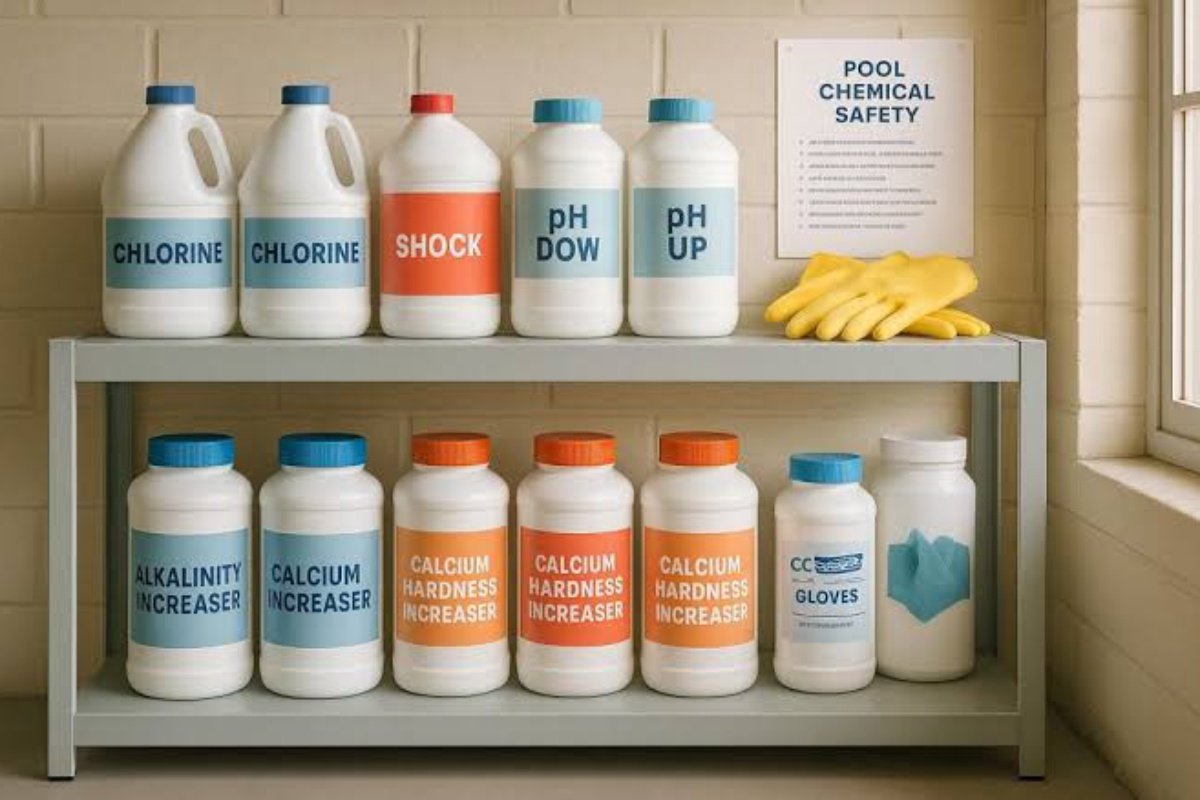
Pool Chemical Storage: How to Keep Costs Down and Stay Safe
You've invested in quality pool chemicals to keep your water sparkling. But where are you storing them? In the garage next to the lawnmower? Under the kitchen sink? In a shed that bakes in the summer sun?
You've invested in quality pool chemicals to keep your water sparkling. But where are you storing them? In the garage next to the lawnmower? Under the kitchen sink? In a shed that bakes in the summer sun?
If this sounds familiar, you're not alone—but you could be putting your safety and your budget at risk. Improper pool chemical storage is one of the most common—and most dangerous—mistakes pool owners make. It can lead to degraded products, wasted money, and even serious safety hazards.
In this guide, we'll show you exactly how to store your pool chemicals safely, extend their shelf life, and save money by avoiding waste. And when you need high-quality, fresh chemicals delivered right to your door, poolblue.store is your trusted partner for smart, safe pool ownership.
Why Proper Chemical Storage Matters
Before we dive into the "how," let's understand the "why." Proper storage isn't just about keeping your garage tidy—it's about:
Reason What's at Stake
Safety Improper storage can lead to fires, explosions, or toxic gas release.
Cost savings Degraded chemicals lose effectiveness—you end up using more to achieve the same result, wasting money.
Product longevity Properly stored chemicals last longer, so you buy less frequently.
Peace of mind Knowing your family and home are safe from chemical hazards.
The Golden Rules of Pool Chemical Storage
Let's start with the non-negotiable rules that every pool owner must follow.
Rule 1: Store in a Cool, Dry Place
Heat and moisture are the enemies of pool chemicals. They cause degradation, clumping, and reduced effectiveness.
Chemical Temperature Sensitivity What Happens When Stored Improperly
Chlorine tablets (Trichlor) Degrades above 90°F (32°C) Loses strength, crumbles, releases fumes
Liquid chlorine Degrades in heat and sunlight Loses up to 20% strength per year; faster in high heat
Calcium hypochlorite (shock) Absorbs moisture Becomes clumpy, hard, or releases oxygen
Test strips Heat and humidity damage False readings, inaccurate results
Algaecides Heat degradation Loses potency
Action: Store chemicals in a climate-controlled area—ideally between 50–80°F (10–27°C). Avoid attics, uninsulated sheds, and garages that bake in summer.
Rule 2: Keep Chemicals Dry at All Times
Moisture is the enemy of most pool chemicals—especially dry chlorine products.
Chemical Moisture Risk Consequence
Calcium hypochlorite Absorbs moisture from air Becomes a solid lump; releases toxic chlorine gas
Trichlor tablets Exposure to humidity Soften, crumble, and lose potency
Stabiliser (CYA) Absorbs moisture Becomes clumpy and hard to dissolve
Baking soda / alkalinity increaser Absorbs moisture Cakes up, harder to pour
Action:
Keep lids tightly sealed at all times.
Use a dedicated, dry storage container for bulk chemicals.
Never store chemicals on concrete floors where moisture can rise.
Use shelving or pallets to keep containers off the ground.
Rule 3: NEVER Store Incompatible Chemicals Together
This is where many pool owners make dangerous mistakes. Different types of chemicals can react violently if they accidentally mix.
Incompatible Pair What Happens
Chlorine (any type) + Acid (muriatic acid, pH-minus) Releases toxic chlorine gas—can be fatal
Trichlor tablets + Calcium hypochlorite Fire or explosion
Chlorine + Oils, grease, or gasoline Fire hazard
Calcium hypochlorite + ANY other chemical Highly reactive—store separately
Liquid chlorine + ANY acid Dangerous gas release
Action:
Store chlorine products FAR AWAY from acids, fuels, and oils.
Use separate, clearly labelled shelves for each chemical type.
Store calcium hypochlorite (shock) completely separately from all other chemicals.
Rule 4: Use Proper Containers
The containers your chemicals come in are designed for safe storage. Don't transfer chemicals to unlabelled or inappropriate containers.
Do Don't
✅ Keep chemicals in their original containers ❌ Transfer to food containers or drink bottles
✅ Ensure lids are tightly sealed ❌ Use containers that are cracked or damaged
✅ Keep labels intact and readable ❌ Remove or deface labels
✅ Use containers with childproof lids ❌ Store chemicals in easy-open containers
Action: If a container is damaged, transfer the contents to a suitable, clearly labelled replacement container. Poolblue.store offers safe, durable storage solutions for pool owners.
Rule 5: Store Out of Reach of Children and Pets
This should go without saying, but it's worth emphasising. Pool chemicals are dangerous if ingested, inhaled, or splashed on skin.
Action:
Store chemicals in a locked cabinet or room.
Use childproof locks if storing in a garage or shed.
Never leave chemicals unattended while in use.
Post emergency contact numbers (poison control) nearby.
Rule 6: Maintain Good Ventilation
Some pool chemicals release fumes, especially when opened after long storage or in warm conditions.
Chemical Fume Risk Ventilation Need
Trichlor tablets Releases chlorine fumes High—store in ventilated area
Calcium hypochlorite Can release oxygen and chlorine gas High—never store in sealed room
Muriatic acid Strong, corrosive fumes Very high—store separately, ventilate
Liquid chlorine Can release fumes if warm Moderate—keep cool and ventilated
Action:
Store chemicals in a well-ventilated area—not in a sealed shed or cupboard.
Never store chemicals in living spaces or bedrooms.
Consider a small exhaust fan if storing in a garage.
Chemical Shelf Life: What You Need to Know
Pool chemicals don't last forever. Knowing how long each product lasts helps you avoid waste and save money.
Chemical Typical Shelf Life How to Extend
Trichlor tablets 3–5 years (if stored properly) Cool, dry, sealed container
Calcium hypochlorite (shock) 1–2 years Keep dry; avoid heat
Liquid chlorine 3–6 months (loses 20% per year) Store cool; buy fresh; don't stockpile
pH adjusters (dry) 3–5+ years Cool, dry storage
Baking soda Indefinite (if kept dry) Cool, dry storage
Cyanuric acid (stabiliser) 5+ years (if kept dry) Cool, dry, sealed container
Algaecides 1–3 years Check expiry date; avoid heat
Test strips 1–2 years Cool, dry; keep container sealed
Muriatic acid 3–5 years (if sealed) Cool, dark, ventilated area
Action: When you buy from poolblue.store, you get fresh, high-turnover products with extended shelf life. We don't sell old stock.
Special Storage Considerations by Chemical Type
Let's go through each major chemical type and its specific storage requirements.
Chlorine Tablets (Trichlor)
Storage Rule Why
Keep dry and sealed Moisture causes them to soften and release fumes
Keep away from direct sunlight UV degrades them
Store below 90°F (32°C) High heat causes degradation
Store in original bucket The bucket is designed to vent small amounts of gas
Never store near acids Releases toxic chlorine gas
Poolblue.store tip: We sell trichlor tablets in sturdy, resealable buckets designed for safe, long-term storage.
Liquid Chlorine (Sodium Hypochlorite)
Storage Rule Why
Store in a cool, dark place Heat and light accelerate degradation
Never store near heat sources Can release fumes or become unstable
Use within 3–6 months Loses about 20% strength per year
Keep sealed when not in use Exposure to air degrades it
Store away from acids and other chemicals Dangerous reactions can occur
Poolblue.store tip: We recommend buying liquid chlorine only for short-term use. For longer storage, choose trichlor tablets.
Calcium Hypochlorite (Cal-Hypo Shock)
Storage Rule Why
Store in a completely dry place Absorbs moisture, becomes hard and dangerous
Keep completely separate from other chemicals Highly reactive—can ignite or explode when mixed
Store in a cool area Heat causes degradation and gas release
Never store near any acid Releases toxic chlorine gas
Use within 1–2 years Degrades over time, especially in heat
Poolblue.store tip: We offer high-quality cal-hypo shock with clear storage instructions on every package.
pH Adjusters (pH-plus / pH-minus)
Storage Rule Why
Keep dry and sealed Moisture causes clumping
Store away from chlorine Acid + chlorine = toxic gas
Long shelf life if stored properly 3–5+ years
Keep in original containers Clear labelling prevents mix-ups
Poolblue.store tip: Our pH adjusters come in durable, moisture-proof containers for long-term storage.
Muriatic Acid
Storage Rule Why
Store in a ventilated area Releases corrosive fumes
Keep away from metal objects Fumes corrode metal
Store away from ALL chlorine Deadly gas reaction
Keep in original container Container is acid-resistant
Store below eye level but out of reach of children Safety precaution
Poolblue.store tip: We offer muriatic acid and pH-minus alternatives with clear safety warnings and storage guidance.
Stabiliser (Cyanuric Acid / CYA)
Storage Rule Why
Keep dry and sealed Absorbs moisture, becomes clumpy
Long shelf life (5+ years) Stable if kept dry
Store away from chlorine While not dangerously reactive, best practice to separate
How to Save Money Through Smart Storage
Proper storage isn't just about safety—it's about protecting your wallet. Here's how:
1. Buy in Bulk, Store Properly
Buying in bulk saves money—but only if you can store the products correctly.
Bulk Buy Savings Potential Storage Requirement
50-lb chlorine tablet bucket Up to 40% per pound Cool, dry, sealed area
Case of liquid chlorine 20–30% per gallon Use within 3–6 months; cool storage
Large pH adjuster container Lower per-pound cost Dry, sealed, cool
Poolblue.store advantage: We offer bulk options with proper storage guidance. Buy in bulk with confidence.
2. Avoid Overbuying Degradable Products
Liquid chlorine degrades. Test strips expire. Don't buy more than you can use within the product's shelf life.
Chemical Smart Buying Strategy
Liquid chlorine Buy for 1–2 months of use, no more
Test strips Buy a season's worth, replace annually
Trichlor tablets Buy a full season; they last 3–5 years
Cal-hypo shock Buy a season's worth; use within 1–2 years
3. Rotate Your Stock
First in, first out (FIFO). Use older products before newer ones.
Date your containers when you receive them.
Place new purchases behind older stock.
Check expiry dates periodically.
4. Check Products Before Using
Before adding a chemical to your pool, inspect it:
What to Check Problem Action
Liquid chlorine colour Dark yellow or brown Degraded—don't use
Dry chlorine texture Clumpy, hard lumps Absorbed moisture—use with caution or discard
Powder colour Discoloured May be degraded—check with test kit
Test strip colour Any unusual colouring Expired—replace
5. Store Chemicals in the Right Season
If you close your pool for winter, store your chemicals properly for the off-season.
Winter storage tips:
Move chemicals to a temperature-controlled area.
Ensure containers are sealed tightly.
Keep away from freeze-thaw cycles that can damage containers.
Liquid chlorine should be stored above freezing.
Storage Space Ideas for Pool Owners
Not sure where to store your chemicals? Here are safe, practical options:
Storage Location Pros Cons
Garage (insulated) Convenient, accessible Can get hot in summer—insulate or use A/C
Basement Temperature stable, cool Keep away from living areas—ventilate
Garden shed (insulated) Purpose-built, separate Needs insulation; avoid uninsulated sheds
Dedicated chemical cabinet Secure, organised Requires investment
Outdoor storage bin (lockable) Kept away from house Ensure weatherproof and ventilated
Action: Poolblue.store offers storage solutions and advice to help you create a safe, organised chemical storage area.
Storage Safety Checklist
Use this checklist to ensure your chemical storage is safe and cost-effective:
Safety Item Check
Are all chemicals in their original, labelled containers? ☐
Are all lids tightly sealed? ☐
Are chemicals stored off the floor (on shelves or pallets)? ☐
Is the storage area cool and dry (50–80°F)? ☐
Is the area well-ventilated? ☐
Are chlorine and acid stored completely separately? ☐
Are chemicals out of reach of children and pets? ☐
Is there a fire extinguisher nearby? ☐
Are emergency contact numbers posted? ☐
Do I rotate stock (FIFO)? ☐
Do I check products for degradation before use? ☐
Common Storage Mistakes and How to Avoid Them
Mistake The Fix
Storing chemicals in the garage during summer Move to a cooler area or insulate your garage
Storing chlorine and acid next to each other Separate by at least several feet—ideally in different cabinets
Leaving lids loose or cracked Always seal tightly after each use
Storing chemicals on concrete floors Use shelves or pallets to prevent moisture absorption
Buying too much liquid chlorine Buy for 1–2 months only
Not dating containers Use a marker to write purchase date on each container
Storing chemicals near lawn equipment or gasoline Move chemicals to a separate, dedicated area
Using unlabelled containers Never transfer chemicals to unlabelled containers
Why Poolblue.store Is Your Storage Partner
At poolblue.store, we don't just sell chemicals—we help you use them safely and cost-effectively.
What We Offer
Service Benefit
Fresh, high-turnover products Longer shelf life; no expired or degraded stock
Clear labelling and safety instructions Know exactly how to store and use every product
Bulk options Save money—with proper storage guidance included
Starter bundles Everything you need in one box, with storage tips
Expert advice Not sure where to store your chemicals? Ask our team
Storage accessories Shelving, containers, and safety gear
We believe that smart storage is smart saving. When you buy from poolblue.store, you're not just getting quality chemicals—you're getting the knowledge to use them safely and efficiently.
Final Verdict: Store Smart, Save Money, Stay Safe
Pool chemical storage is one of the most overlooked aspects of pool ownership—but it's also one of the most important.
Store cool and dry to extend product life.
Keep chlorine away from acids to prevent deadly gas.
Use original containers with clear labels.
Rotate your stock to avoid waste.
Keep chemicals out of reach of children and pets.
With the right storage practices, you'll save money, avoid waste, and keep your family safe. And when you need fresh, reliable pool chemicals, poolblue.store is here to help—with quality products and expert guidance every step of the way.
Visit poolblue.store today to explore our range of pool chemicals, bulk options, and storage solutions. Your pool deserves the best—and so does your peace of mind.