
If you've been treating your pool the same way in January as you do in July, you're not alone—but you're also not doing your pool any favours. Pool chemistry isn't static. It changes with the seasons, and your maintenance routine needs to change with it
Water temperature, UV intensity, rainfall, and swimmer load all affect how your pool behaves. What works in the cool spring won't cut it during the scorching summer heat. And the chemicals you use in autumn look completely different from your winterising routine.
In this comprehensive guide, we'll walk you through exactly how to adjust your pool chemicals for each season—so you can keep your water sparkling, safe, and swim-ready all year round. And when you need professional-grade products and expert guidance, poolblue.store has everything you need.
Why Seasonal Adjustments Matter
Your pool is a living ecosystem that responds to its environment. Here's why seasonal adjustments are non-negotiable:
Season What Changes Why It Matters
Spring Water warms, algae awakens, winter debris lingers Corrosive cold water needs balancing; dormant algae spores activate
Summer Peak heat, heavy UV, high bather load Chlorine demand spikes; CYA becomes critical; algae risk increases
Autumn Falling leaves, cooler nights, less swimming Organic debris consumes chlorine; pH can drift; prepare for closing
Winter Cold temperatures, reduced activity Water becomes more corrosive; chlorine demand drops; freeze protection needed
The golden rule: Test regularly and adjust proactively—not reactively. A pool that drifts out of balance in spring can cost hundreds to fix by midsummer.
Spring: The Big Reset
Spring is the most critical season for pool chemistry. After months of winter stagnation, your water needs a complete reset.
What's Happening
Water temperature rises from cold to comfortable
Algae spores transition from dormant to active
pH and alkalinity may be unstable due to winter rain and snowmelt
Cyanuric acid (CYA) levels often drop due to dilution
Cold water is more corrosive—it "wants to eat" calcium
Spring Chemical Action Plan
Parameter Target Action
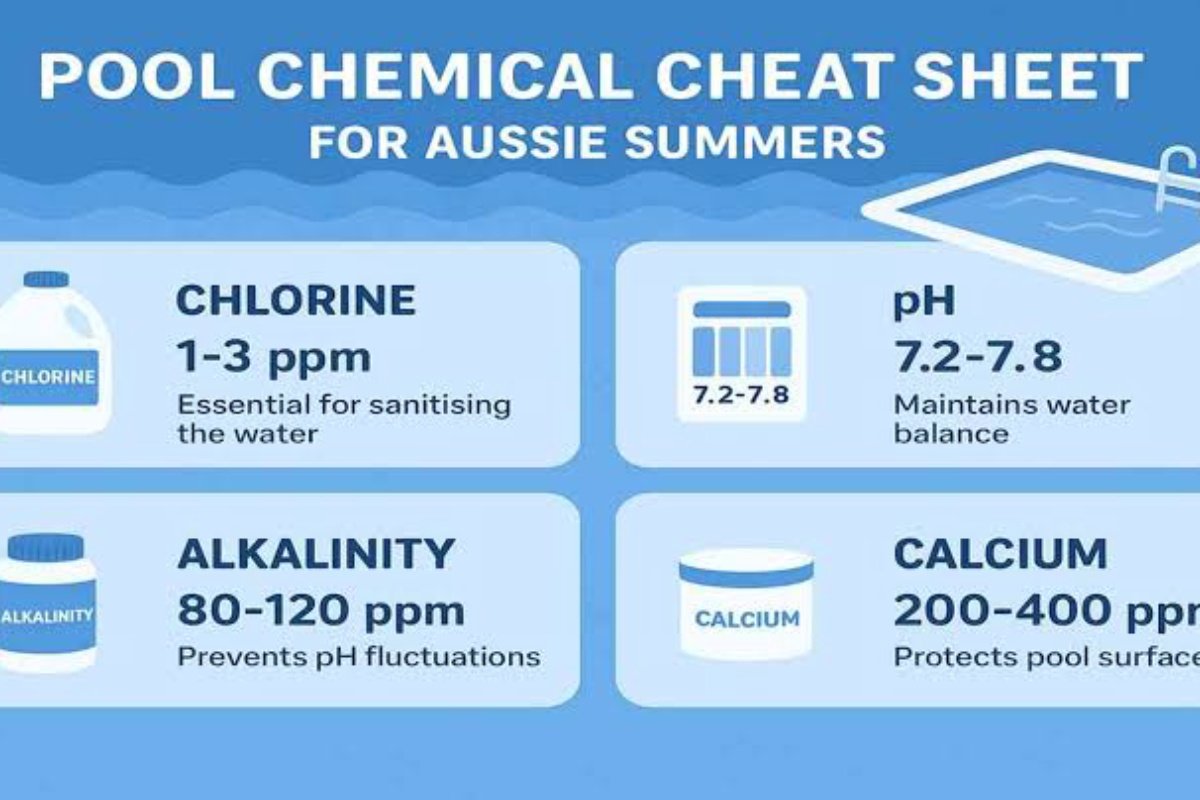
pH 7.2–7.6 Test and adjust with pH-plus or pH-minus
Free Chlorine 1.0–3.0 ppm Add chlorine tablets or liquid chlorine
Total Alkalinity 80–120 ppm Use alkalinity increaser (baking soda) if low
Cyanuric Acid (CYA) 30–50 ppm Add stabiliser if below 30 ppm
Calcium Hardness 200–400 ppm Add calcium increaser if low
Spring Step-by-Step
Remove the cover and clear all debris from the pool and skimmer baskets.
Run the pump for 24 hours before testing to circulate stagnant water .
Test all parameters—pH, chlorine, alkalinity, CYA, calcium hardness.
Shock the pool with a heavy dose of calcium hypochlorite or liquid chlorine .
Adjust alkalinity first, then pH, then chlorine.
Add stabiliser (CYA) if levels are below 30 ppm .
Brush and vacuum to remove any algae or debris clinging to surfaces.
Poolblue.store tip: We carry complete spring start-up kits with everything you need for a successful opening—including shock, algaecide, test strips, and pH adjusters.
Summer: The Peak Season
Summer is when your pool works hardest. High temperatures, intense sunlight, and frequent swimmers all combine to stress your water chemistry.
What's Happening
UV rays destroy chlorine rapidly—up to 90% in a few hours without stabiliser
Algae growth accelerates in warm water
Heavy bather load introduces oils, sweat, and contaminants
Evaporation increases, affecting water level and calcium hardness
pH can drift upward due to aeration from swimmers and splash-out
Summer Chemical Action Plan
Parameter Target Action
pH 7.4–7.6 (slightly higher than spring) Test 2–3 times weekly; use pH-minus if drifting up
Free Chlorine 1.0–3.0 ppm Expect higher demand; test frequently
Total Alkalinity 80–120 ppm Maintain to buffer pH swings
Cyanuric Acid (CYA) 30–50 ppm Essential—protects chlorine from UV
Calcium Hardness 200–400 ppm Monitor—evaporation increases calcium concentration
Summer Step-by-Step
Test water 2–3 times per week—chlorine demand rises fast with heat and UV .
Keep CYA between 30–50 ppm. If it creeps above 50 ppm, chlorine becomes "locked" and ineffective .
Shock weekly—especially after pool parties or heavy rainstorms .
Run your pump 8–12 hours per day to ensure proper filtration .
Use algaecide preventatively to keep algae at bay during heatwaves .
Brush and vacuum weekly—warm surfaces are algae magnets.
The summer trap: Many pool owners over-chlorinate when they see a spike in demand. Instead, stabilise with CYA and use algaecide as a backup.
Poolblue.store advantage: We offer high-quality algaecides, stabiliser, and shock treatments designed for peak summer conditions.
Autumn: The Transition
Autumn is often overlooked, but it's the bridge between active summer and winter closure. Falling leaves, cooler nights, and reduced swimming mean your chemistry needs to shift.
What's Happening
Falling leaves introduce organic debris that consumes chlorine
Cooler water slows chemical activity
pH can drop due to rain and organic matter
Chlorine demand decreases as water cools
Autumn Chemical Action Plan
Parameter Target Action
pH 7.2–7.6 Adjust as needed—rain can lower pH
Free Chlorine 1.0–3.0 ppm Expect lower demand; reduce dosing
Total Alkalinity 80–120 ppm Check—rain dilutes alkalinity
Cyanuric Acid (CYA) 30–50 ppm If closing, ensure CYA is in range
Calcium Hardness 200–400 ppm Adjust—cold water is more corrosive
Autumn Step-by-Step
Skim and clean daily—fallen leaves quickly consume chlorine and create stains .
Test weekly—keep an eye on pH and alkalinity as rain affects both .
Brush walls and floor to remove any algae spores before closing .
If closing for winter, plan your winterising routine now—shock, algaecide, and pH adjustment.
Poolblue.store tip: We carry complete winterising kits—including algaecide, winter shock, and cover accessories.
Winter: Protection Mode
Winter is about protection, not perfection. The goal is to prevent damage during the cold months.
What's Happening
Water becomes more corrosive at cold temperatures
Chlorine demand drops significantly—fewer contaminants
pH can drop due to rain and snowmelt
Equipment is at risk of freezing in cold climates
Winter Chemical Action Plan (If Closing)
Parameter Target Action
pH 7.2–7.4 (lower than summer) Protects equipment in cold water
Free Chlorine 1.0–3.0 ppm Shock before closing; don't leave tablets in skimmer
Total Alkalinity 80–120 ppm Adjust before closing
Cyanuric Acid (CYA) 30–50 ppm Check before closing
Calcium Hardness 200–400 ppm Adjust—soft water is more corrosive in cold
Winter Step-by-Step
Balance all parameters before closing—pH 7.2–7.4 is ideal for winter .
Shock the pool to eliminate all organic contaminants.
Add algaecide—use a winter-specific formula to prevent algae in stagnant water .
Remove all chlorine tablets from feeders—they can damage equipment in winter .
Lower water level below the skimmer (if required).
Cover the pool securely .
For Pools That Stay Open
Test weekly—chlorine demand is lower, so adjust dosing .
Run pump 4–6 hours per day—enough to circulate but not waste energy .
Monitor freeze protection—ensure pump and automation systems protect equipment in freezing weather .
Poolblue.store advantage: We offer winterising chemicals and winter covers to protect your pool during the cold months.
Weather Events: The Curveballs
Beyond seasonal shifts, sudden weather events can knock your chemistry off balance.
Event Effect Action
Heavy rain Dilutes chlorine and alkalinity, lowers pH Test and adjust—add pH-plus and alkalinity increaser
Heatwave High chlorine demand, algae risk Shock, run pump longer, add algaecide
Storm debris Organic matter consumes chlorine Skim, shock, run pump 24 hours
Drought Evaporation raises calcium and TDS Top up water, monitor calcium hardness
Pro tip: Always test after any major weather event—don't wait for your weekly routine .
The One Tool That Makes Seasonal Adjustments Easy
Adjusting chemicals for each season is a lot to track. pH, chlorine, alkalinity, CYA, calcium—and they all change with temperature, rain, and usage. That's a lot of numbers to juggle.
That's exactly why poolblue.store created the Poolblue App.
How the Poolblue App Works
Step What Happens Time
1 Take a photo of your water test (strip or drop kit) 2 seconds
2 The app analyses every parameter 5 seconds
3 Exact recommendations—what to add, how much, in what order Instant
It doesn't matter what type or brand of test you use. The Poolblue App reads your results and gives you a complete seasonal adjustment plan.
Why the Poolblue App Is Perfect for Seasonal Adjustments
Feature Benefit
Photo-based analysis No colour matching guesswork
Exact dosing No over- or under-dosing
Correct order Add chemicals in the right sequence
Automatic inventory tracking Know what you have—anytime, anywhere
Expert tips Pro-level guidance for every season
The Poolblue App is free and exclusively available to poolblue.store customers. When you shop with us, you get the most advanced pool water analysis tool on the market—designed to make seasonal adjustments effortless.
Quick Reference: Seasonal Dosing Summary
Parameter Spring Summer Autumn Winter (Closed)
pH 7.2–7.6 7.4–7.6 7.2–7.6 7.2–7.4
Free Chlorine 1.0–3.0 ppm 1.0–3.0 ppm 1.0–3.0 ppm Shock before closing
Total Alkalinity 80–120 ppm 80–120 ppm 80–120 ppm 80–120 ppm
CYA 30–50 ppm 30–50 ppm 30–50 ppm 30–50 ppm
Calcium Hardness 200–400 ppm 200–400 ppm 200–400 ppm 200–400 ppm
Shock Heavy dose Weekly As needed Before closing
Filter Run Time 6–8 hrs/day 8–12 hrs/day 4–6 hrs/day 4–6 hrs/day (if open)
Final Verdict: Adjust with the Seasons, Trust the Data
Seasonal pool adjustments aren't complicated—but they are essential. Spring needs a reset. Summer demands vigilance. Autumn is about preparation. Winter is about protection.
The key to success is testing regularly and adjusting proactively. And with the right products and the Poolblue App from poolblue.store, you can take the guesswork out of every season.
Visit poolblue.store today to explore our full range of seasonal chemicals, test kits, starter bundles, and the Poolblue App. Your perfect pool is waiting—in every season.